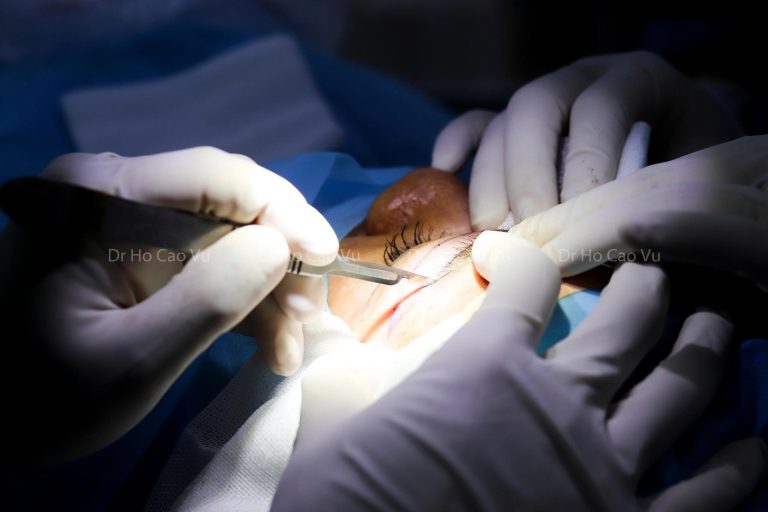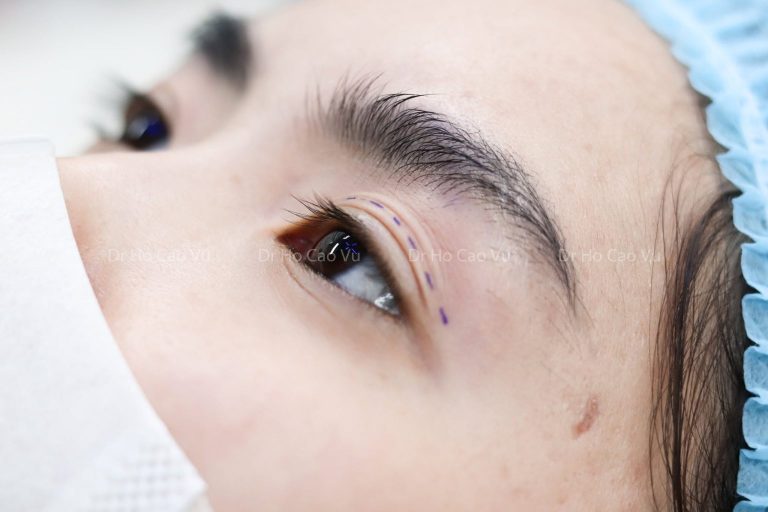
 Thẩm Mỹ Nâng Ngực
BÀI VIẾT19/11/2026
Breast Cancer Screening After Breast Augmentation: Check-Ups, Imaging and Warning Signs
MSc, MD Ho Cao Vu
Medical practice licence No. 028475/BYT-CCHN, issued by the Ministry of Health of Vietnam on 28 June 2018. Specialist in General Surgery and Plastic & Aesthetic Surgery, with over 15 years of experience in plastic and aesthetic surgery and over 20 years of general surgical experience in benign breast disease, breast cancer, abdominal wall and abdominal surgery at Cho Ray Hospital.
Updated November 2026 — cross-checked against the American Cancer Society’s guidance on mammograms for women with breast implants, the American Cancer Society screening recommendations, the FDA 2020 breast implant labeling guidance and the American College of Radiology 2023 screening guidelines.
Women who have had breast augmentation often ask whether breast cancer can still be found with an implant in the way, which tests are safe, and how often to come back for a check-up. This article answers those questions for women living in Vietnam, using a recent case in which an early cancer was found at a routine one-year check-up.
Short answer
Yes. Breast cancer screening still works after breast augmentation, and it should not be skipped. The American Cancer Society (ACS) says women with implants should keep having regular screening mammograms at the same ages as other women. What changes is the technique: the imaging team needs to know about the implants, extra views are taken, and ultrasound or MRI may be added. Check-ups with your surgeon also include a breast examination.
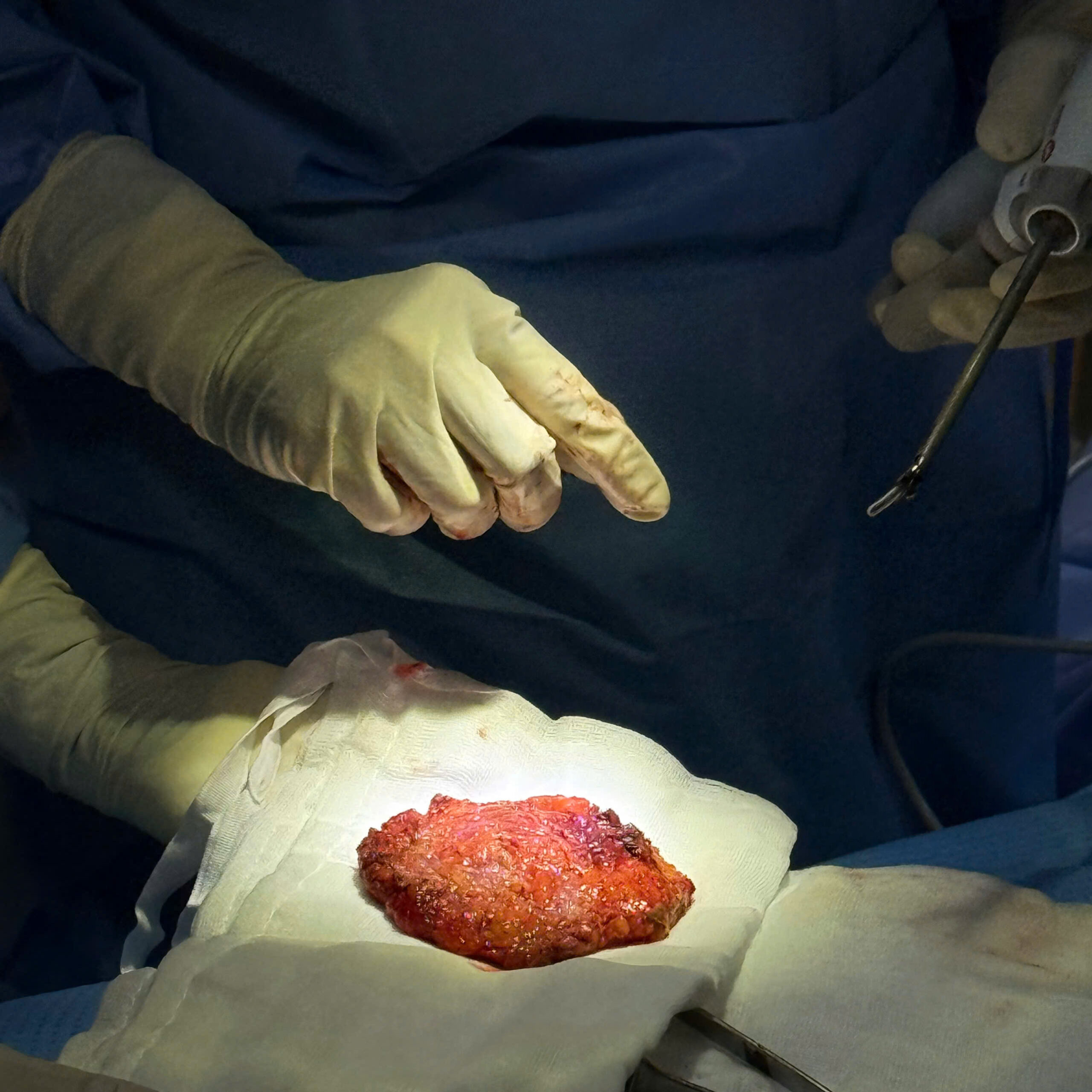
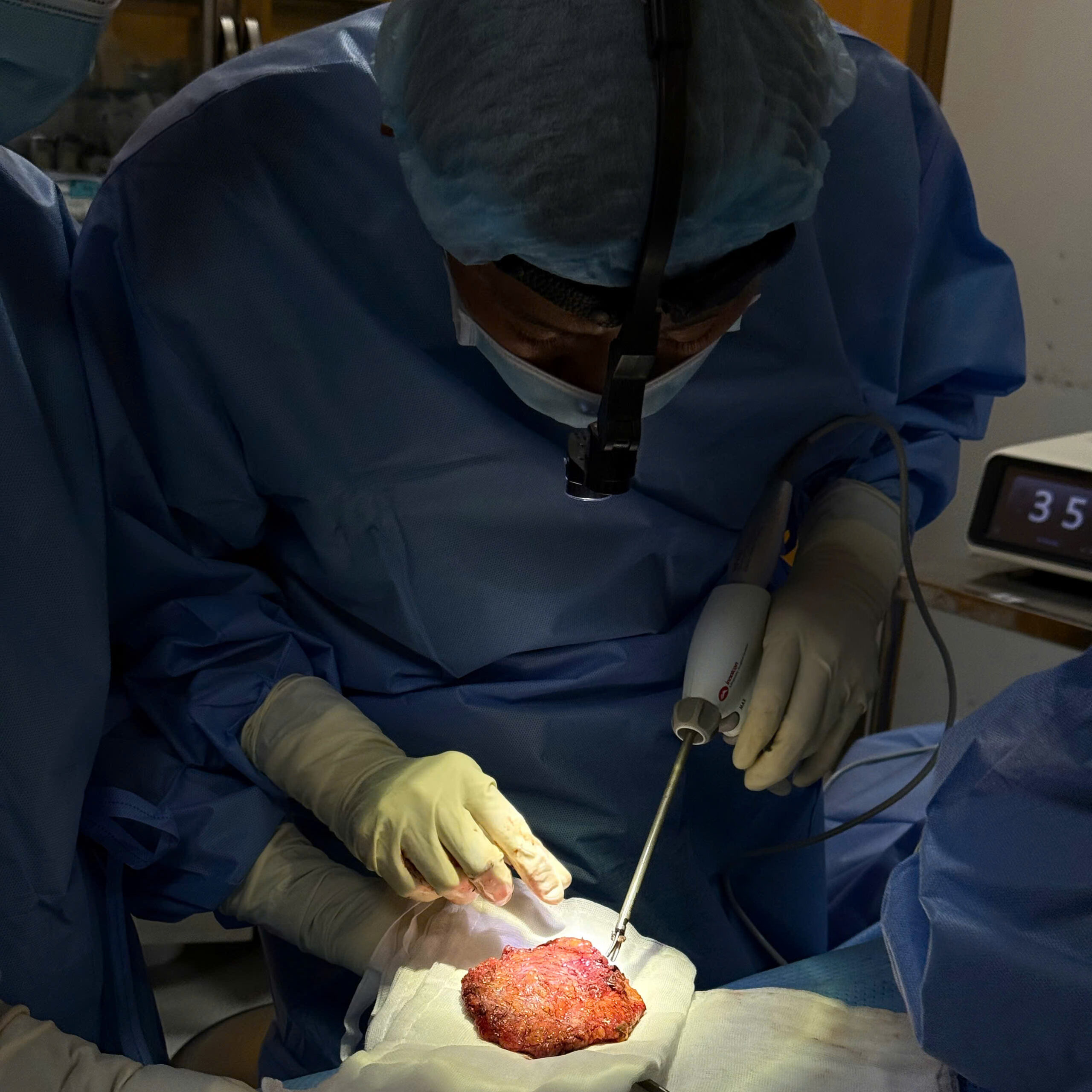
A case from our clinic: early cancer found at a one-year check-up
In September 2026, a 39-year-old woman came back for her scheduled check-up about one year after breast augmentation. She had no complaint. On examination, MSc, MD Ho Cao Vu felt a firm, slightly hard lump in the upper outer part of the right breast. It moved less than a benign lump usually does, but it was not attached to the skin or to the tissue behind it.
The sequence that followed shows how screening works around an implant:
- Breast ultrasound at a general hospital found a cyst rated BI-RADS 3 and a separate 13 × 12 mm lesion rated BI-RADS 4, meaning suspicious. The lymph nodes under both arms looked benign, and both implants showed no sign of leakage.
- Specialist breast ultrasound on 14 September 2026 upgraded the lesion to BI-RADS 4C.
- Ultrasound-guided core needle biopsy the same day took 6 tissue samples. The result on 15 September 2026 confirmed invasive breast carcinoma, grade 2.
- Chest CT on 17 September 2026 found no sign of spread to the lymph nodes, lungs or the space between the lungs.
- Breast-conserving surgery on 23 September 2026 at South Saigon International General Hospital: the doctor removed the tumour with an ultrasonic surgical scalpel and sent 8 tissue samples for frozen-section examination during the operation. All margins were free of cancer cells.
- After surgery, immunohistochemistry tests (ER, PR, HER2, Ki-67) were done to plan further treatment, and the patient now has a follow-up ultrasound every 3 months.
The case was reported by VTC News; the full timeline is on our Vietnamese case page. She felt well, and the lump was found because she came back.


Does breast augmentation raise the risk of breast cancer?
The US Food and Drug Administration (FDA) states that it has not detected any association between silicone gel-filled breast implants and breast cancer (FDA). Women with implants can still develop breast cancer at the same rate as other women, which is exactly why screening continues.
There is one implant-related cancer to know about. Breast implant-associated anaplastic large cell lymphoma (BIA-ALCL) is a cancer of the immune system that can develop in the scar tissue (capsule) around an implant. The FDA is clear that BIA-ALCL is not breast cancer, and it is looked for in a different way: the FDA lists persistent swelling or pain, or other changes in the area around the implant, as the symptoms that should prompt an assessment (FDA).
Which tests are used, and what each one checks
Two questions often get mixed up: “Is there cancer in my breast tissue?” and “Is my implant intact?”
| Test | Cancer screening | Implant check | Notes |
|---|---|---|---|
| Clinical exam by your surgeon | Can find a lump, as in the case above | Checks shape, position, firmness | Part of every scheduled check-up at our clinic |
| Mammogram with implant displacement views | Yes, the standard screening test | Not the method the FDA names for rupture | 8 images in total instead of 4 |
| Breast ultrasound | Used to check lumps and as an extra test | Accepted by the FDA for rupture screening without symptoms | No radiation, no compression |
| Breast MRI | Recommended yearly for high-risk women | The FDA calls it the most effective test for silent rupture | Also used when ultrasound is unclear |
Mammograms with implants
According to the ACS, women with implants have the 4 standard screening pictures plus 4 extra “implant displacement” (ID) views, 2 on each breast. In an ID view the implant is pushed back against the chest wall and the breast tissue is pulled forward over it, so more of the tissue can be seen. Both silicone and saline implants can hide the tissue lying in line with them, which is why these extra views matter. ID views are harder to do and can be uncomfortable when a capsule has tightened around the implant; they are easier when the implant sits under the chest muscle (ACS). A more detailed look at accuracy and the research behind it is in our English-language article on mammograms with breast implants.
Ultrasound and MRI
The FDA’s 2020 labeling guidance recommends that women with silicone gel implants have their first ultrasound or MRI at 5–6 years after surgery, then every 2–3 years, even without symptoms. An MRI is recommended at any time if there are symptoms or the ultrasound result is unclear. Saline implants have no screening schedule, because their rupture is usually noticeable. The same guidance adds that these implant scans do not replace screening mammography for breast cancer (FDA).
For cancer screening, breast MRI is reserved for women at higher risk. The ACS recommends a yearly MRI together with a mammogram, typically from age 30, for women with a lifetime risk of about 20–25% or more, a BRCA1 or BRCA2 gene change, or chest radiation before age 30 (ACS). In Dr Vu’s practice, mammography is usually combined with breast ultrasound rather than used on its own, and MRI is requested when the examination or ultrasound raises a question about the breast tissue or the implants.
At what age should screening start?
Having implants does not change the age at which screening begins or how often it is done. For women at average risk, the ACS recommends:
- Age 40–44: the option to start yearly mammograms.
- Age 45–54: a mammogram every year.
- Age 55 and over: every 2 years, or yearly if preferred, while in good health.
The American College of Radiology (ACR) recommends yearly screening from age 40 for average-risk women and a breast cancer risk assessment for every woman by age 25, so that those at higher risk can start earlier (ACR). If you are under 40, the check-ups after augmentation may be the main time a doctor examines your breasts, which is one reason not to skip them.
Before augmentation, Dr Vu asks every patient about her family history of breast cancer and assesses her overall risk. If a lump feels firm to hard and poorly mobile, or an ultrasound is rated BI-RADS 3–4, he weighs the other risk factors and may recommend an ultrasound-guided biopsy before any cosmetic surgery is planned.


Why you must tell the imaging centre about your implants
The ACS advises mentioning your implants when you book, so that you can ask whether the centre has experience imaging women with implants, and telling the technologist again before the scan starts. There are three practical reasons:
- The right views are taken. Without ID views, part of the breast tissue stays hidden.
- The implant is protected. The ACS notes that very rarely the mammogram process can rupture an implant, and the FDA lists compression during a mammogram among the causes of rupture.
- Findings are read correctly. The FDA notes that calcium deposits in the capsule can be mistaken for cancer on a mammogram, which can lead to extra surgery. Earlier images and your surgical details help the radiologist compare.
Scars matter too. Dr Vu rarely places implants through an incision around the areola or at the base of the nipple. In his experience this route cuts across the breast gland, tends to be more painful, and leaves scar tissue that can look like a cancerous lesion on imaging, so some women end up having a biopsy of what turns out to be benign scar. He prefers the incision in the fold under the breast (inframammary fold), which avoids cutting through the gland. If your augmentation was done through the areola, tell the radiologist.


How to prepare for a screening appointment
Step 1: When booking, say that you have breast implants and ask whether implant displacement views are routine at that centre.
Step 2: Bring your implant details if you have them: date of surgery, implant type (silicone or saline), size, whether it sits above or below the muscle, and where the incision was made.
Step 3: Bring previous breast images and reports, including any ultrasound done at your surgical check-ups, so the radiologist can compare.
Step 4: Tell the technologist again before the scan begins, and mention if the breasts feel firm or tight.
Step 5: Send the report to your surgeon. If it gives a BI-RADS category of 3 or higher, book a review rather than waiting for the next routine visit.
Understanding the BI-RADS result
Radiologists use the BI-RADS system to sum up mammogram, ultrasound and MRI findings. The ACS explains the main categories as follows:
| Category | Meaning | Chance of cancer (ACS) | Usual next step |
|---|---|---|---|
| 3 | Probably benign | No more than 2% | Repeat imaging, usually in 6–12 months |
| 4A | Suspicious, low | More than 2% up to 10% | Biopsy should be considered |
| 4B | Suspicious, moderate | More than 10% up to 50% | Biopsy should be considered |
| 4C | Suspicious, high | More than 50% but less than 95% | Biopsy should be considered |
| 5 | Highly suggestive of cancer | At least 95% | Biopsy very strongly recommended |
Source: ACS — Understanding your mammogram report. A category 4 result is not a diagnosis; only a biopsy can confirm cancer. In the case above, the core needle biopsy was guided by ultrasound so that the needle reached the lesion without puncturing the implant.
Check-up schedule after breast augmentation at our clinic
For women who had breast augmentation at the Edopi clinic under Dr Vu’s professional supervision, the follow-up schedule is:
| Time after surgery | What happens |
|---|---|
| First 10 days | Wound checks every other day |
| 1 month and 3 months | Check of healing, implant position and shape |
| 6 months, 1 year, 3 years, 5 years, 10 years | Examined in person by Dr Vu, free of charge, with a breast examination at every visit |
| From 5–6 years (silicone gel implants) | Ultrasound or MRI of the implants, then every 2–3 years, per the FDA, or earlier if the doctor advises |
| From age 40 (or earlier if higher risk) | Routine breast cancer screening at the usual ages, which implants do not change |
Come back sooner for any of the changes listed below. If an abnormality is found, Dr Vu refers patients to specialist centres such as Ho Chi Minh City Oncology Hospital or Cho Ray Hospital for full cancer treatment. Some overseas Vietnamese patients whose lesion was found at a check-up have returned to their country of residence to continue treatment there. If pain lingers after surgery, our article on pain after breast augmentation explains what is expected. Vietnamese readers can find the visit-by-visit schedule in our article on regular check-ups after breast augmentation.


Warning signs: when to see a doctor before your next check-up
The ACS lists these changes as possible signs of breast cancer and advises having any new lump or change checked by an experienced doctor (ACS):
- A new lump or mass, especially one that is hard, painless and fixed, although cancers can also be soft or tender.
- Swelling of all or part of the breast, even without a lump.
- Skin dimpling, sometimes like orange peel, or red, dry, flaking or thickened skin.
- A nipple that turns inward, or nipple discharge other than breast milk.
- Swollen lymph nodes under the arm or near the collarbone.
Women with implants should also report changes around the implant itself. Persistent swelling or pain around the implant needs assessment for BIA-ALCL, as described above. A breast that becomes hard, rides high or changes shape is often thought to be capsular contracture, but that is not the only cause. Capsular contracture means the capsule around the implant thickens and tightens; a pseudo-capsular contracture happens when the pocket made for the implant was too small or unsuitable. An examination is needed to tell them apart. Our article on relapsing capsular contracture after breast augmentation describes one such case.
Frequently asked questions
Can you detect breast cancer with implants? Yes. Implants can hide part of the breast tissue on a standard mammogram, which is why extra implant displacement views are taken. A clinical examination and breast ultrasound can also find a lump, as in the case described above.
Can a mammogram rupture my implant? Very rarely, according to the ACS. It presents this as a reason to tell the imaging centre about your implants, not a reason to avoid screening.
How long after breast augmentation can I get a mammogram? The sources we reviewed do not give a fixed waiting time. Ask your surgeon; an ultrasound can be arranged in the meantime if anything needs checking.
Does an MRI for my implants count as cancer screening? Not automatically. The FDA states that implant rupture scans do not replace screening mammography. Ask the radiologist whether the scan protocol also assesses the breast tissue.
Do I still need check-ups if nothing hurts? Yes. Our patient had no symptoms. Her cancer was found because she came to a routine one-year visit.
Conclusion
Breast augmentation does not rule out breast cancer screening. Keep to the normal screening ages, tell the imaging centre about your implants, and treat implant scans and cancer screening as separate tasks. Regular check-ups with your surgeon add a breast examination at every visit, which is how an early cancer was found in the case above.
To book a consultation or a follow-up visit with MSc, MD Ho Cao Vu, call 0918413443 (+84 918 413 443 from abroad).
References
- American Cancer Society. Mammograms for women with breast implants. Last revised 23 July 2026 — https://www.cancer.org/cancer/types/breast-cancer/screening-tests-and-early-detection/mammograms/mammograms-for-women-with-breast-implants.html
- American Cancer Society. American Cancer Society recommendations for the early detection of breast cancer. Last revised 23 July 2026 — https://www.cancer.org/cancer/types/breast-cancer/screening-tests-and-early-detection/american-cancer-society-recommendations-for-the-early-detection-of-breast-cancer.html
- American Cancer Society. Breast cancer signs and symptoms. Last revised 23 July 2026 — https://www.cancer.org/cancer/types/breast-cancer/screening-tests-and-early-detection/breast-cancer-signs-and-symptoms.html
- American Cancer Society. Understanding your mammogram report. Last revised 23 July 2026 — https://www.cancer.org/cancer/types/breast-cancer/screening-tests-and-early-detection/mammograms/understanding-your-mammogram-report.html
- US Food and Drug Administration. Breast Implants — Certain Labeling Recommendations to Improve Patient Communication. Guidance, September 2020 — https://www.fda.gov/media/131885/download
- US Food and Drug Administration. Risks and Complications of Breast Implants — https://www.fda.gov/medical-devices/breast-implants/risks-and-complications-breast-implants
- US Food and Drug Administration. Things to Consider Before Getting Breast Implants — https://www.fda.gov/medical-devices/breast-implants/things-consider-getting-breast-implants
- American College of Radiology. New ACR breast cancer screening guidelines call for earlier screening for high-risk women. 3 May 2023 — https://www.acr.org/News-and-Publications/Media-Center/2023/New-ACR-Breast-Cancer-Screening-Guidelines-call-for-earlier-screening-for-high-risk-women
- VTC News. Phát hiện ung thư vú sau nâng ngực nhờ tái khám định kỳ (Breast cancer found after augmentation thanks to regular check-ups). 10 November 2026 — https://vtcnews.vn/phat-hien-ung-thu-vu-sau-nang-nguc-nho-tai-kham-dinh-ky-ar1050373.html
Xem thêm trong chủ đề này
Headline 05
Đừng làm tổn hại thêm cho bệnh nhân khi không làm được tốt hơn